
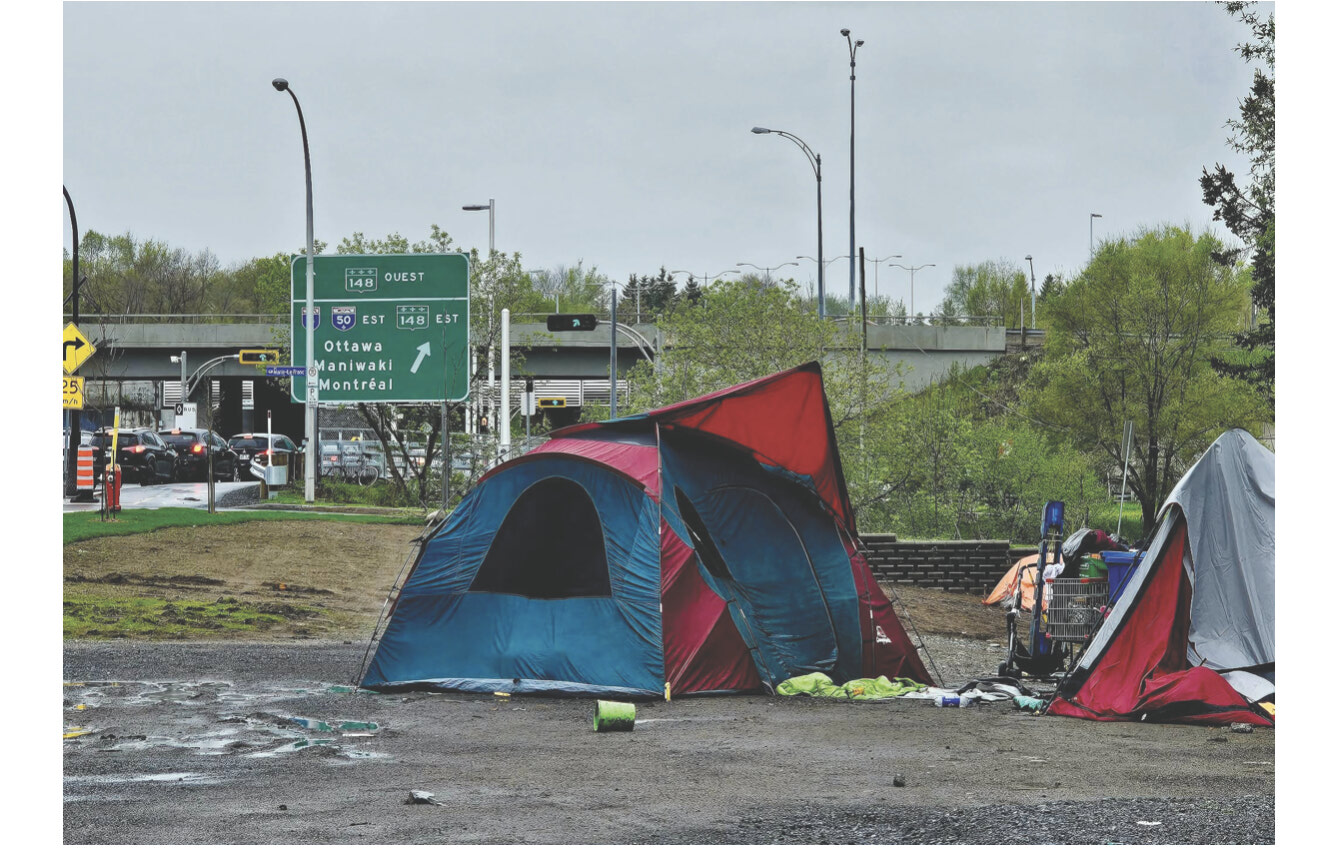
Women in Quebec, especially seniors and single mothers, face disproportionate housing insecurity and rising hidden homelessness, with local advocates warning that current resources and policies fall short of addressing the gendered impacts of the crisis. Photo: Tashi Farmilo
Gender gap deepens in fight for affordable housing
Tashi Farmilo
Women in Quebec, particularly those over 65 and those living alone, face significantly greater challenges in securing adequate housing than men do, according to a new report from the Conseil du statut de la femme. Based on 2021 census data, the report found that 37 per cent of senior women renters live in unaffordable housing, compared to 27 per cent of men in the same age group. Among women living alone, 40 per cent spend more than 30 per cent of their income on rent, while 32 per cent of men do.
The report highlights how rising rents and limited affordable options disproportionately affect women with fixed or lower incomes, especially those living on public pensions, disability assistance or single incomes. Renters overall face more difficulty accessing affordable and adequate housing than owners, and within that group, women carry a greater burden due to long-standing wage inequality, caregiving responsibilities and overrepresentation in low-paid sectors.
In the Outaouais, the trends outlined in the report are reflected in local demographics. Women make up the majority of residents over age 65 and lead nearly three-quarters of single-parent families. These groups are especially vulnerable when housing becomes unaffordable or unavailable. Without secure housing, women are more likely to face social isolation, declining health, financial stress and, in some cases, homelessness.
AGIR Outaouais, a regional organization focused on social justice, says the data reflects what it sees in the community. Many women experiencing housing precarity are living in unstable or unsafe conditions, often hidden from public view. This includes staying temporarily with friends or relatives, in motels or in vehicles. These situations are not always counted in official homelessness statistics but are nonetheless harmful, especially for women with children or those fleeing violence.
Access to emergency shelters for women in the Outaouais remains limited. Only two shelters in the region, Centre Mechtilde and Maison Libère-Elle, specifically serve women at risk of homelessness. AGIR warns that these resources are not sufficient to meet growing demand and that more sustained investment is needed in both emergency and long-term housing solutions.
The organization also calls for stronger support for community groups that work directly with affected populations, including CRIO, FOHO, FRAPRU, Les Œuvres Isidore Ostiguy and Mon Chez Nous, which provide housing assistance, advocacy and transitional services. AGIR argues that these groups play a critical role in addressing inequality and supporting people in regaining stability.
Director Stéfanny St-Laurent said the crisis cannot be addressed through a one-size-fits-all approach. Women’s experiences in the housing system are shaped by multiple factors, including immigration status, disability, age and caregiving roles. “It is important that solutions take into account the needs specific to women and their realities, in order to develop adapted measures, particularly for women at the crossroads of oppressions,” she said. “Addressing the housing crisis for women will require more than increasing supply. It will require policies that are gender-aware, that prioritize deeply affordable units and that work in tandem with social services to ensure no one is left behind.”
Municipal councillor Caroline Murray, who represents Deschênes district (3), said city council has adopted a housing needs assessment that calls for accelerating the construction of non-profit housing, protecting existing affordable units and prioritizing support for those most affected by the crisis, including women. “The municipal council has adopted a clear housing needs assessment. We must accelerate the construction of non-profit housing, protect the affordable units we already have, and prioritize support for the most vulnerable, particularly women and those hardest hit by the affordability crisis,” she said.
Murray said the city has allocated $20 million in its 2026 budget for off-market housing projects and will reconvene its housing task force in March to bring together partners and prioritize community-led developments. She pointed to $92 million invested between 2022 and 2025, resulting in more than 1,300 units built or underway, including 30 family units in Deschênes (Les Rapides), 255 units for seniors across three projects and 17 units for women in difficulty at Maison d’Elles. “The needs remain significant,” she said. “We have set a target of delivering 1,500 additional units over the next four years.”